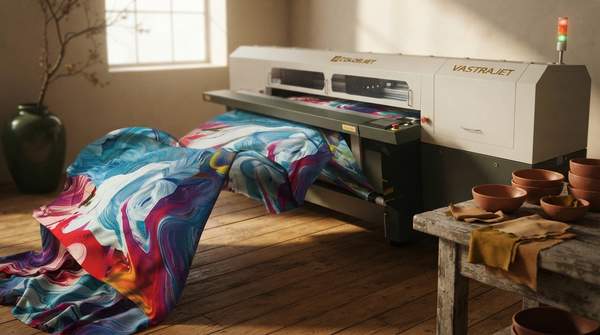
Digital textile printing is shifting the fashion supply chain from a forecast-driven, mass-production model to a demand-driven one in which garments can be produced only after they are ordered. Industry analyses attribute the change to the technology's core capabilities: reduced wastage, on-demand printing, versatility, and shorter lead times relative to traditional screen and analog printing, according to Coherent Market Insights. The consequence is not merely faster printing — it is a structural reordering of how apparel moves from design to customer, and a licensing of new "sell-then-make" business models that were previously uneconomical.
Digital Transformation of Textile Supply Chains
The traditional apparel supply chain has long been anchored in forecasts: brands commit to fabric, prints, and batch volumes months before a garment reaches a shopper, and every misjudged prediction becomes unsold inventory. Digital printing weakens that dependency because a design file can be sent to a printer with no physical plate, screen, or color separation, allowing production to wait until demand is known. Market researchers at Coherent Market Insights report growing adoption of digital over screen and analog printing precisely because of on-demand capability and shorter lead times, alongside reduced wastage. WhatTheyThink's coverage of the PRINTING United Digital Experience records the PRINTING United Alliance describing digital textiles as an "exploding market," with the technology described as enabling on-demand manufacturing that "hands the power back to the consumer."