A luxury handbag's durability is determined by measurable things: the type of material, the way it is stitched, and the engineering hidden inside its lining—not by brand name or price alone. Full-grain leather remains the benchmark for long-term resilience and character. Nylon offers lightweight, water-resistant practicality at a lower cost. Mycelium "mushroom" leather is a genuine sustainability breakthrough whose abrasion resistance is still developing. And the seam that holds it all together can matter as much as the skin itself. Here is how to read a bag like a materials engineer.
Traditional Excellence: Full-Grain Leather
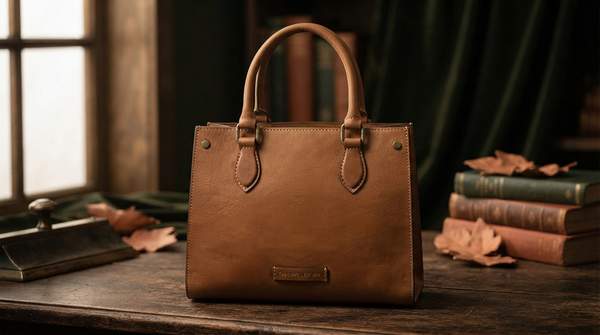
Full-grain leather sits at the top of the leather hierarchy for a simple reason: its surface has not been sanded, corrected, or coated over. As San Rocco Italia's craftsmanship guide explains, it maintains the whole natural grain with an unaltered surface, which is why it rates as "exceptional" in durability and develops a patina over time rather than deteriorating like coated alternatives.
Compare that with processed leather, which the same guide describes as sanded for uniformity and consequently only moderately durable. The very coating that gives corrected leather its even, flawless look also removes the densest part of the hide's structure.
But full-grain leather is a demanding material. Wearcut's engineering guide to luxury handbags is blunt about it: natural leather is organic and needs consistent maintenance to preserve its fiber strength, surface coloration, suppleness, and overall form across decades of use. Ethically sourced hides and responsible manufacturing can improve its environmental profile, though the guides stop short of detailing the tanning process's environmental footprint. Buy full-grain leather for longevity and character—but expect a care commitment in return.
Modern Resilience: Synthetic Materials like Nylon
Can a synthetic fabric compete with calfskin? On durability, often yes. Writing for the Daily Front Row, Tom White describes nylon as more lightweight than canvas or leather, resilient to daily wear and tear, and resistant to water damage—a long-lasting fabric that survives for years without losing its shape or structural integrity.
Maintenance is where nylon pulls clearly ahead. Stains wipe away with soap and water, no specialist products required. It is also less expensive than leather while still, in White's assessment, offering a touch of luxury and sophistication. The trade-offs are real too: nylon is non-biodegradable and less environmentally friendly than other materials, though recycled nylon bags offer a more sustainable alternative.
So who should choose nylon? If your priority is a lightweight, weatherproof daily bag that shrugs off rain and spills, nylon delivers performance that rivals or exceeds some leathers. What it does not deliver is leather's formal appearance, tactile depth, or the way full-grain ages. That is a values decision, not a quality ranking.