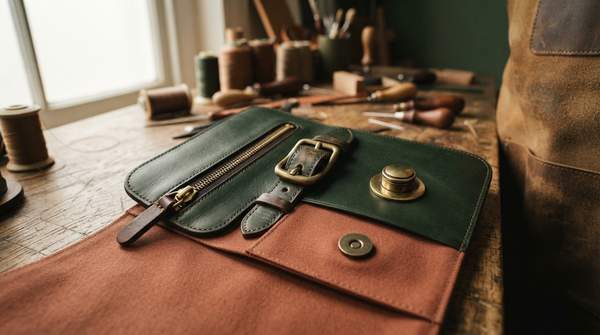
The right handbag fastening is the one that matches your design's priorities: a zipper when security comes first, a decorative clasp when the closure is meant to be seen, a side-release buckle for quick modern access, and a magnetic snap when you want the material to speak for itself. Every choice trades something away. This guide compares the four most common closure types against three consistent criteria—security, aesthetic impact, and ease of use—so you can match the fastening to the bag rather than to a supplier's catalog.
Introduction: Balancing Form and Function in Handbag Fastenings
Why does the closure deserve as much attention as the leather? Because it carries real responsibility. As the leather goods maker Lodis puts it, hardware "secures your belongings, holds straps and handles in place, helps the bag keep its structure, and shapes the overall look"—and a bag made from excellent leather can still feel unfinished if the hardware is weak or loose. A good closure keeps items secure while shaping how the bag looks and how it feels to open. That means your decision is never purely mechanical or purely visual. It is a design decision with functional consequences, and it deserves the same rigor you apply to silhouette and material.
Handbag Fastening Comparison Matrix
Use this matrix to narrow your choice quickly. Each row reflects how hardware suppliers and design guides characterize the closure type across the three criteria that matter most, plus where each typically appears.
| Closure Type | Security Level | Aesthetic Impact | Ease of Use | Typical Use Case |
|---|---|---|---|---|
| Zipper | High—locking teeth prevent dust and item loss | Variable, from discreet to decorative depending on material and placement | Smooth operation requiring little force; ideal for quick access | Everyday bags where secure closure is paramount |
| Clasp (kiss lock, frame, turn lock) | Medium to high, but can loosen with poor quality or repeated wear | Highly decorative; a prominent design element in its own right | Requires a deliberate opening action | Wallets and small bags where the clasp is a central feature |
| Side-release buckle | Medium—holds firm during movement but may not deter determined theft | Functional, clean, modern, utilitarian | Opens with a simple press; instant release | Travel gear, sports bags, and accessories needing speed |
| Magnetic snap | Lower—convenience-oriented rather than theft-resistant | Nearly invisible; lets materials shine without distraction | Fast, one-handed access | High-end minimalist bags where subtlety enhances luxury |
Read the matrix as a decision shortcut. If your brief demands maximum security, start with zippers. If it demands a signature visual moment, start with clasps. If it demands speed, weigh buckles against magnetic snaps—and let the aesthetic brief break the tie.
Zipper Closures: Secure and Versatile
Zippers are the workhorse of bag closures, and their security claim is concrete: the interlocking teeth prevent both dust and item loss, according to bag manufacturer Veggance. Ease of use is equally strong—smooth operation that requires little force makes them ideal for quick access, which is why they dominate everyday bags. The aesthetic range is unusually wide because the zipper itself comes in many materials. Metal versions read sleek and durable, PVC offers color at medium durability, leather reads classic, and woven fabric gives texture at lower strength. That material choice lets you tune the zipper toward invisible utility or visible style without changing the closure mechanism.
Clasps: Decorative and Distinctive
Clasps are the one closure type that can carry the design. MOYA Studio, a handbag design house, advises founders to consider how the clasp works, where it sits, and whether its size and style complement the overall silhouette—because the closure can be an important design element in its own right. Turn locks and tuck locks, as hardware supplier Richarms notes, "elevate your purse's aesthetic" while still providing reliable fastening. The trade-off is durability: a frame clasp that loosens after repeated open-close cycles, as Bagsplaza warns, becomes a customer complaint that follows your brand online. Quality matters more here than with any other closure, so clasps suit wallets and small bags where the hardware is a feature, not a fixture.
Side-Release Buckles: Practical and Modern
The side-release buckle is built for motion. Made of plastic or metal, it is lightweight and durable, and its defining feature is instant release on demand while holding firm during movement—Veggance describes it as minimizing the risk of accidental openings. Operation is a simple press, which makes it the fastest deliberate closure in this comparison. Aesthetically, it reads clean and modern, fitting utilitarian and sport-inspired designs. The honest limitation is security: it provides reliable closure for active use but is not a theft deterrent, so it belongs on travel gear, sports bags, and accessories where speed and a contemporary look outrank protection.
Magnetic Snaps: Convenient and Discreet
Magnetic snaps are the minimalist's closure. Richarms highlights them as the leading example of invisible hardware, offering "a touch of convenience" and a clean look that allows the materials to shine without distraction—a trend particularly popular in high-end bags where subtlety enhances luxury. Ease of use is their superpower: opening is fast and effectively one-handed, with no teeth, levers, or latches to manage. The corresponding weakness is security. A magnetic closure keeps contents contained during normal carry but offers little resistance to a determined hand, so it suits designs where the customer values effortless access and an uninterrupted exterior over protection.
The Aesthetic Trade-Off: Visible vs. Invisible Hardware
Underneath the four-way comparison sits one foundational choice: do you want the closure seen or hidden? Decorative hardware—turn locks, frame clasps, custom-stamped plates—announces itself and can anchor the visual weight of the design. Invisible hardware, like magnetic snaps, disappears so the leather or fabric leads. As one artisan at Hab-To Leather House puts it, "the way a bag opens and closes defines the user's relationship with the work. If a clasp feels flimsy, the whole experience of owning a luxury item is cheapened." Finish compounds the message: Bagsplaza's guide associates polished gold with luxury and evening bags, antique brass with heritage styles, and gunmetal with modern, utilitarian designs. Decide this axis first, and the field narrows itself.
Making Your Fastening Decision
Designers should select a handbag fastening that aligns with the bag's intended use, desired aesthetic, and required security level, considering the trade-off between visible decorative elements and discreet functionality. Work through three questions in order: What must the closure protect, and from what? Should the hardware be seen or hidden? How fast must the bag open in daily use? The measurable indicator of a good choice is that the chosen fastening type successfully integrates with the bag's material and design, providing the intended balance of security, aesthetics, and ease of use for the target customer. Note the honest limits of this guide: it covers the most common closure types rather than all available hardware, and final selection still depends on your supplier's quality and the precise materials in the bag—so prototype the pairing before committing to production.
Sources
- Leather Handbag Hardware 101: Zippers, Clasps, And What They Say About Quality — Lodis
- 14 Different Types of Bag Closures and Fastenings — Veggance | Handbag OEM/ODM Manufacturer
- A Comprehensive Handbag Hardware Guide — MOYA Bags Studio
- The Ultimate Guide to Types of Purse Clasps — Richarms » Richarms
- Bag Design Services | Custom Leather Bags ManufacturerBag Hardware Selection Guide — Bagsplaza
- Essential Leather Bag Hardware: The Artisan’s Guide to Quality and Sou — HAB-TO LEATHER HOUSE