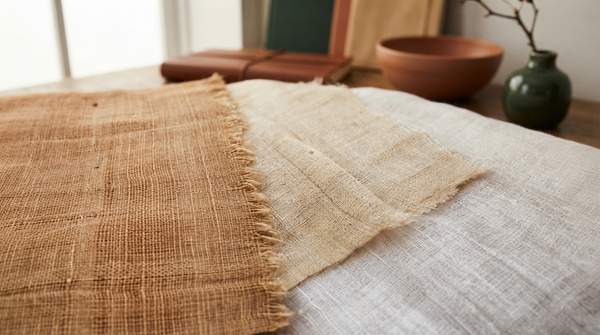
Ugandan barkcloth is one of humanity's oldest textiles—a fabric made without weaving, spun from nothing but the beaten inner bark of the Mutuba tree. For the Baganda people of southern Uganda's Buganda kingdom, it is far more than cloth: it is ceremonial regalia, a marker of social identity, and a living link to ancestral knowledge. Today, the same material is finding new life in contemporary art, design, and sustainable fashion, recognized by UNESCO as a Masterpiece of the Oral and Intangible Cultural Heritage of Humanity.
The Ancient Craft of Ugandan Barkcloth: A Sustainable Heritage
Barkcloth making predates the invention of weaving itself. UNESCO describes its preparation as "one of humankind's oldest savoir-faire, a prehistoric technique that predates the invention of weaving." The craft belongs to the Baganda people of the Buganda kingdom, where, according to UNESCO's multimedia archives, craftsmen of the Ngonge clan—headed by a hereditary chief craftsman known as the kaboggoza—have historically manufactured barkcloth for the royal family and the wider community.
What makes the material remarkable, beyond its antiquity, is its sustainability. Textile researcher Kerri Akiwowo, writing in the Journal of Textile Engineering & Fashion Technology in 2025, characterizes Ugandan barkcloth as a regenerative fibre that is still farmed and manufactured in Uganda today. The harvest does not kill the tree: after the inner bark is stripped, the trunk is wrapped and bound with leaves and grass to protect it while the bark regrows. According to artist and researcher Lesli Robertson, who has documented the craft's history and contemporary uses, a single Mutuba tree can regenerate its bark for another harvest within a year and yield 30 to 40 cloths over its lifespan.