Threads & Fabric
The Wardrobe EditAccessory NotesBeauty ThreadHome TextureThe Style ReportTravel in StyleSustainable StitchInnovation LabArtisan SpotlightMarket Trends
Threads & Fabric

Weaving together style, substance, and sustainability.

A premier fashion, textile, and lifestyle publication covering apparel, accessories, beauty, home decor, sustainability, textile innovation, global artisans, and industry trends.

Sections

  • The Wardrobe Edit
  • Accessory Notes
  • Beauty Thread
  • Home Texture
  • The Style Report
  • Travel in Style
  • Sustainable Stitch

Writers

Meet our writers →

Trending Topics

FashionLuxurySustainable FashionNatural DyesEco FriendlyCrystal JewelryConstructionBrand Ambassador

About

  • Contact
  • Privacy Policy
  • Terms of Service

© 2026 Threads & Fabric. All rights reserved.

  1. Home
  2. /Artisan Spotlight
  3. /What Are Natural Dyeing Techniques for Heritage Colors and Sustainable Practices?
Artisan Spotlight

What Are Natural Dyeing Techniques for Heritage Colors and Sustainable Practices?

The U.S. Food and Drug Administration (FDA) will soon revoke authorization for synthetic dyes like Citrus Red No. 2 and Orange B, initiating a necessary move away from chemical colorants. This regulat

FA
Fatima Al-Jamil

July 10, 2026 · 4 min read

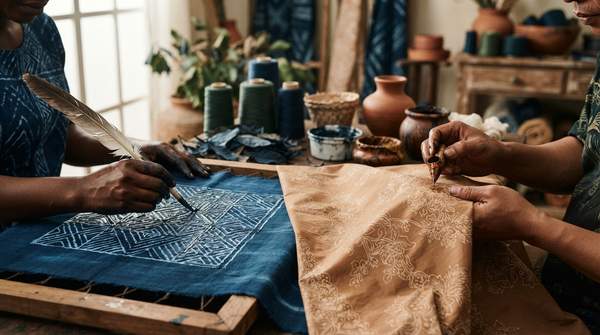
Vibrant, naturally dyed fabrics with rich textures and organic patterns displayed in a sunlit, rustic workshop, showcasing heritage colors and sustainable artistry.

The U.S. Food and Drug Administration (FDA) will soon revoke authorization for synthetic dyes like Citrus Red No. 2 and Orange B, initiating a necessary move away from chemical colorants. A growing imperative to address potential health and environmental concerns linked to these artificial additives is signaled by this regulatory action. Consumers and manufacturers alike face the prospect of a market without these long-standing synthetic options.

However, the transition to sustainable alternatives like natural dyes remains a gradual process. While natural dyeing techniques and heritage colors offer significant environmental benefits, they currently hold less than a third of the broader organic dyes market, indicating a slow shift from niche to mainstream adoption. This presents a tension between urgent regulatory demands and the industry's pace of change.

Based on increasing market projections, technological innovations, and regulatory pressures against synthetic alternatives, natural dyes are poised to significantly expand their market share and become a cornerstone of sustainable textile production, though widespread adoption will require overcoming existing cost and scalability hurdles.

Regulatory Pressure Fuels Natural Dye Demand

The U.S. Food and Drug Administration (FDA)'s impending revocation of authorization for specific synthetic dyes, including Citrus Red No. 2 and Orange B, within the coming months, marks a critical turning point for the textile industry, according to Venable. This regulatory move mandates a swift departure from chemical colorants, driven by health and environmental concerns. Textile manufacturers who delay transitioning to natural alternatives risk future non-compliance and market exclusion, rather than just appealing to niche consumer preferences. This regulatory shift forces a faster industry transition towards more environmentally benign solutions.

The Roots of Color: A Natural Revival

Dr. Jane Howard actively works with woad to create blue colors on fabric, participating in the 'Growing Colour Together' project. This initiative, alongside collaborations between Woven, Stitched Up, and the University of Manchester, explores natural dyeing in sustainable textile production, as reported by Woven in Kirklees. Such projects are vital, bridging heritage techniques with modern sustainable practices and fostering innovation. However, while academic and collaborative efforts are fostering innovation and awareness in natural dyeing, market share data suggests these efforts have yet to translate into significant acceleration of natural dye adoption beyond its current niche, highlighting a gap between R&D and widespread commercial scaling.

Innovating for a Greener Palette

Advanced dyeing technologies are transforming the viability of natural dyes. Supercritical carbon dioxide (CO2) dyeing uses zero water and recycles 95% of the CO2, according to ExploreTex. Separately, Digital Textile Printing (DTP) utilizes up to 90% less water than traditional methods. These cutting-edge technologies directly counter the historical resource intensity of dyeing, making natural alternatives increasingly viable and attractive for large-scale textile production. Companies that fail to invest in water-saving natural dyeing technologies like supercritical CO2 and Digital Textile Printing are overlooking a critical competitive advantage, as these innovations fundamentally address the scalability and resource intensity barriers that have historically limited natural dyes.

The Growing Market for Earth-Friendly Hues

The natural dyes market shows consistent expansion, valued at USD 5.3 billion in 2025, according to P&S Market Research. This market is projected to grow by 5.8% during 2026–2032, reaching USD 7.8 billion by 2032. This consistent growth and substantial market valuation confirm a robust and expanding segment within the textile industry, driven by sustainability concerns. It implies a growing consumer mandate for eco-friendly products and a necessary shift in industry practices towards more sustainable coloring methods.

Beyond the Niche: Natural Dyes in the Global Picture

The Global Organic Dyes Market is valued at USD 8.1 billion in 2024 and is projected to reach approximately USD 11.6 billion by 2030, growing at a Compound Annual Growth Rate (CAGR) of 6.1% from 2024 to 2030, according to Strategic Market Research. Natural dyes currently hold a 29% share of this market. Despite this relatively small current share, the natural dyes market's projected growth rate (5.8%) is slightly slower than the overall organic dyes market (6.1%). This suggests that while natural dyes are growing, they are not yet outstripping their broader category, indicating a persistent challenge in scaling beyond niche status. Without aggressive technological adoption and regulatory enforcement, natural dyeing risks remaining a commendable niche rather than a dominant industry solution.

Common Questions About Natural Dyes

What are heritage colors in natural dyeing?

Heritage colors refer to shades derived from traditional natural sources that have been used for centuries, often tied to specific cultural practices and regional flora. These colors, like the deep blues from woad or rich reds from madder root, are valued for their historical authenticity and connection to ancestral dyeing methods, offering a distinct aesthetic that synthetic dyes often cannot replicate.

How do natural dyes contribute to sustainability?

Natural dyes contribute to sustainability by reducing reliance on petroleum-based chemicals and harsh mordants common in synthetic dyeing, which often lead to water pollution and energy-intensive manufacturing processes. They are biodegradable and generally non-toxic, minimizing environmental impact throughout their lifecycle from source to disposal, though some natural mordants still require careful management.

What are the benefits of reviving traditional dyeing methods?

Reviving traditional dyeing methods not only preserves cultural heritage and artisanal skills but also promotes biodiversity by encouraging the cultivation of dye plants. This approach fosters local economies and reduces the textile industry's overall carbon footprint by utilizing renewable resources and often less energy-intensive processes compared to mass-produced synthetic dyes.

If regulatory pressures intensify and technological innovations continue to address scalability, the natural dyes market, projected to reach USD 7.8 billion by 2032, appears poised to significantly expand its 29% share of the organic dyes market, fundamentally reshaping sustainable textile production.

Related Coverage from Artisan Spotlight

  • What is Cochineal Dye? History, Process, and Modern Applications

Tags

Natural DyesSustainable FashionHeritage CraftsTextile ArtEco FriendlyArtisan Spotlight
FA

Fatima Al-Jamil

Global Correspondent

Fatima is an investigative journalist who reports from the front lines of the textile industry. Her work gives voice to the growers, spinners, and garment workers who form the foundation of this global trade.

More from Artisan Spotlight

Spanish artist Bad Gyal, the new global brand ambassador for Dsquared2, posing confidently in a striking Dsquared2 outfit.

Dsquared2 names Bad Gyal its first global brand ambassador

In a significant strategic pivot, luxury fashion house Dsquared2 named Spanish artist Bad Gyal as its first-ever global brand ambassador in June 2026.

Fatima Al-Jamil· Jun 25
Dolce & Gabbana's contrasting focus on discounted menswear and expanding luxury home lifestyle collection, Casa.

Dolce & Gabbana's Lifestyle Expansion and Menswear Shift

Dolce & Gabbana's beauty business alone generated an estimated 910 million euros in 2023, a 35 percent increase, according to WWD .

Fatima Al-Jamil· Jun 20
Luca Benini, founder of Slam Jam, bridging the gap between underground streetwear aesthetics and global corporate brand strategy.

Slam Jam Luca Benini Elevates Brand Strategy

Slam Jam, a name synonymous with underground streetwear culture, now generates 60 percent of its sales by advising global giants like Nike and Vans on how to stay relevant, according to WWD .

Fatima Al-Jamil· Jun 20
Close-up of vibrant red cochineal dye being processed, with a blend of ancient and modern tools visible in the background.

What is Cochineal Dye? History, Process, and Modern Applications

In a controlled laboratory setting, an acrylic box system, designated STC-01, is achieving an unprecedented yield: 4.

Fatima Al-Jamil· Jun 18

Trending Now

1
Top 3 Reasons Serious Golfers Choose Aiming Fluid Golf's Magna-Anchor System

Top 3 Reasons Serious Golfers Choose Aiming Fluid Golf's Magna-Anchor System

Market Trends· 2 views
2
How to Stop Credential Leaks Before They Happen in 2026

How to Stop Credential Leaks Before They Happen in 2026

Innovation Lab· 3 views
3
When A Product Idea Needs Cosmique Labs Cosmetic Formulation Support

When A Product Idea Needs Cosmique Labs Cosmetic Formulation Support

Beauty Thread· 1 view
4
Why Legacy Crystals and Minerals Appeals to Both New Crystal Buyers and Serious Collectors

Why Legacy Crystals and Minerals Appeals to Both New Crystal Buyers and Serious Collectors

Accessory Notes· 1 view
5
What Bricklayers Should Know About HeliMate Australia's Masonry Reinforcement Solutions

What Bricklayers Should Know About HeliMate Australia's Masonry Reinforcement Solutions

Home Texture· 1 view
6
Walker Roofing & Construction LLC Review: Is Their 10-Year Workmanship Guarantee The Real Deal?

Walker Roofing & Construction LLC Review: Is Their 10-Year Workmanship Guarantee The Real Deal?

Home Texture· 1 view