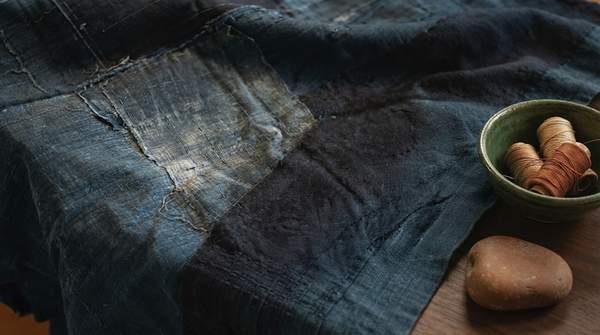
Literally translated as "rags" or "tatters," Boro is a traditional Japanese textile born from the stark realities of 19th-century peasant life. It is a practice of meticulous repair, where layers of old and used fabric are patched together with simple running stitches to extend the life of clothing and bedding for generations. This patchwork style, once a visible and sometimes shameful marker of poverty, has undergone a profound cultural re-evaluation. Today, the deeply textured and historically rich aesthetic of Boro is celebrated in global art exhibitions and reinterpreted by luxury fashion houses, embodying a powerful philosophy of sustainability and respect for materials in an age of disposability.
Historical Roots in Peasant Life
The origins of Boro are deeply embedded in the economic and social conditions of Japan's Edo period (1600–1868). For the vast majority of the population, who were rural peasants, life was a cycle of conservation and reuse. According to the Cooper Hewitt, Smithsonian Design Museum, there was no excess of anything, making it essential to repurpose every available material. The immense labor and skill required to produce homespun yarns and weave cloth meant that every textile was precious. This was particularly true in the remote, cold northern regions of Japan, where durable, warm clothing was a matter of survival through harsh winters.
As detailed by Eva Beere in Retrospect Journal, Boro emerged in the 19th century out of this fundamental necessity. Garments, often made from indigo-dyed cotton or hemp, were not discarded when they became worn. Instead, they were mended, reinforced, and layered with scraps of other used fabrics. A single kimono or set of bedding could be passed down through several generations, accumulating a dense collage of patches that served as a tangible record of a family's history, struggles, and resourcefulness. These were not aesthetic objects but utilitarian ones, their form dictated entirely by function and the need to endure.
The Philosophy of 'Mottainai'
The physical act of creating Boro is animated by a core Japanese cultural concept: 'mottainai'. As writer Marina Herriges explains in Selvedge Magazine, mottainai is a principle that expresses deep regret concerning waste and advocates for prolonging an object's life through recycling and repurposing. This worldview, with roots in the moral teachings of Shinto and Buddhism, is embodied "stitch for stitch, scrap for scrap" in every Boro textile. It fostered an unpretentious and deeply ingrained habit of thrift, where every piece of cloth held potential value.
For many years, however, this same resourcefulness was a source of shame. The patched and faded textiles served as an open reminder of Japan's impoverished past, leading many within the country to reject them. It was often international textile collectors who first recognized the profound beauty and cultural significance of these pieces. According to Herriges, these collectors treasured the "exemplary mottainai practices" of 19th-century rural life and admired the craft as a striking illustration of a lost folk tradition. This outside appreciation helped spark a renewed reverence for Boro within Japan itself.
Boro: A Tale of Two Eras
The journey of Boro from a textile of survival to a symbol of sustainable luxury reveals a dramatic shift in cultural values. The motivations, materials, and meaning behind a historical Boro garment are fundamentally different from a contemporary piece inspired by its aesthetic. This contrast highlights how a practice born of hardship has been reinterpreted as a conscious philosophical and artistic choice.
| Dimension | Historical Boro | Contemporary Boro Revival |
|---|---|---|
| Motivation | Driven by economic necessity and the need for survival. Mending was a functional requirement to conserve scarce resources. | Driven by aesthetic appreciation, a philosophical commitment to sustainability, and the creation of luxury fashion. |
| Materials | Utilized any available scraps of worn, faded, indigo-dyed cotton and hemp that could be salvaged for patching. | Often uses intentionally curated fabrics, which may be new or vintage, selected to achieve a specific visual effect. |
| Technique Focus | Centered on functional mending and reinforcement. Layering and stitching were done to maximize durability and extend a garment's lifespan. | Emphasizes the visual artistry of patchwork and visible mending. Stitches and patches are often used for decorative or expressive purposes. |
| Cultural Meaning | A direct and visible symbol of poverty, hardship, and the resourcefulness required to endure difficult living conditions. | Represents sustainable luxury, conscious consumerism, artistic expression, and a connection to cultural heritage. |
Contemporary Influence on Sustainable Fashion
While the daily practice of mending clothes at home is now rare in modern Japan, the spirit and aesthetic of Boro have found a powerful new expression in high fashion and art. As Western culture increasingly embraces sustainable practices like thrifting and upcycling, Boro has become a symbol of mindful consumption and anti-waste philosophy. Its influence is clearly visible in the collections of numerous innovative designers and luxury brands.
Japanese labels such as Kapital and Visvim, along with internationally renowned designers like Junya Watanabe, have created collections decidedly based on the visual language of Boro cloth and traditional folk clothing. According to Cooper Hewitt, some brands, like Visvim, actively collaborate with traditional artisans, a practice that helps promote and preserve these historic craftsmanship skills. The Boro aesthetic has also appeared in the work of major European fashion houses like Dior and Loewe, signaling its arrival as a globally recognized symbol of high fashion.
This revival extends into the art world, where Boro textiles are now treated as significant cultural artifacts. The Amuse Museum in Tokyo, which opened in 2008, specializes in Boro and holds a collection of over 30,000 pieces of Japanese folk art. Similarly, an exhibition at the Japan Society, "Boro Textiles: Sustainable Aesthetics," showcased historical garments, cementing their status as objects worthy of preservation and study.
Embracing Boro's Enduring Message
The evolution of Boro from a humble textile of necessity to a celebrated art form reflects a profound shift in how we perceive value, beauty, and history. The very qualities that once signified poverty—the dense patches, the visible repairs, the faded indigo hues—are now admired for their authenticity and the stories they tell. The philosophy of 'mottainai', once a principle for survival, now offers a compelling model for confronting the wastefulness of the modern fashion industry.
By understanding this history, readers can recognize Boro-inspired designs and appreciate the deeper cultural and historical narrative behind them, informing their choices in sustainable fashion. The enduring legacy of Boro is not just its unique aesthetic but its powerful message of resilience and respect for resources. The measurable outcome of its revival is an increased recognition of its aesthetic in fashion and design, coupled with a deeper understanding of its 'mottainai' philosophy, which continues to inspire a more conscious approach to the things we make and use.
Sources
- Boro and Other Japanese Recycled Wonders — Cooper Hewitt Smithsonian Design Museum
- THREADBARE Torn and Tattered; Boro textiles from Japan — Selvedge Magazine