Synthetic spider silk is made in four bio-engineering stages: designing the silk gene, expressing it in a host organism, purifying the resulting protein, and spinning that protein into a fiber. Each stage carries distinct technical choices and hurdles, and the central challenge of the field is that no artificial process yet reliably reproduces what a spider's own gland achieves.
The Promise of Spider Silk: A Natural Supermaterial
Spider silk is coveted because it combines properties that man-made fibers rarely offer together. A scientific review of spidroins, the highly repetitive proteins that form the fiber, reports that silk fibers have tensile strengths comparable to steel while some silks are nearly as elastic as rubber on a weight-to-weight basis; combining strength and extensibility yields a toughness two to three times that of synthetic fibers like Nylon or Kevlar. The same review notes that spider silk is antimicrobial, hypoallergenic, and completely biodegradable. Because collecting natural spider silk in quantity is impractical, laboratory-scale synthetic production is what gives researchers and engineers a route to an unlimited supply of threads.
Stage 1: Gene Design and Protein Expression
Farming spiders fails for a biological reason: as a molecular-biology writer for GoldBio explains, spiders are cannibalistic and territorial, making them difficult to rear in large numbers, and captive spiders produce less silk. The engineering alternative is to take the genetic instructions to the factory. Researchers first worked out the structure of the central portions of silk genes, which, as reported in a textile-association account of the field, produced foundational hypotheses about how amino acid sequences relate to material properties. Full gene sequencing is now possible, including untranslated regions that control protein production, and it clarified how the N- and C-terminal regions of silk proteins act like endcaps essential to spinning fibers from the liquid dope.
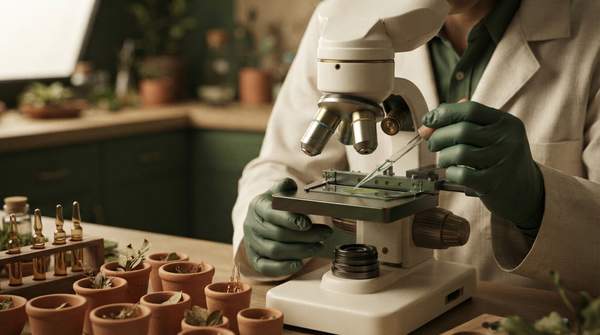
With the gene in hand, the sequence is inserted into a host. A research team that developed a laboratory-scale wet-spinning protocol integrated expression of recombinant spider silk proteins in bacteria with purification and extrusion. Across the field, genetically engineered E. coli bacteria, yeasts, plants, silkworms, and other animals have all been used to produce spider-silk-like proteins. Reported examples include E. coli engineered to produce a 556 kDa spidroin, and goats modified to secrete silk proteins in their milk.
Synthetic Spider Silk Production Pathway
The table below sequences the four stages and maps the main host systems and techniques onto each, together with the specific challenge that stage must overcome.
| Stage | What Happens | Key Methods and Hosts | Challenge |
|---|---|---|---|
| 1. Gene Design | Silk genes are sequenced and engineered for recombinant production, including terminal regions that control spinning | Gene sequencing and synthesis of spidroin sequences | Linking amino acid sequence to final material properties |
| 2. Protein Expression | The engineered gene is expressed in a host that manufactures the silk protein | E. coli, yeast, plants, transgenic silkworms, goats (proteins secreted in milk) | Host-derived proteins can have different characteristics than those from a spider |
| 3. Protein Purification | The protein is isolated and concentrated from host material before spinning | Cell lysis and concentration as part of an integrated wet-spinning protocol | Isolating and concentrating the protein without degrading it |
| 4. Fiber Spinning | Concentrated protein dope is extruded into a fiber, followed by mechanical post-spin treatment | Wet-spinning: extrusion of protein fibers in an aqueous environment | Replicating the spider's complex gland and duct conditions; spun fibers run 10–60 μm versus 2.5–4 μm for natural silk |
Read down the stages and the division of labor becomes clear: the first three are biological, solving how to manufacture a large, repetitive protein cheaply, while the fourth is mechanical, solving how to convert that protein into a fiber with natural-like performance. The trade-off across host systems is between production practicality and fidelity to the spider's own material.
Stage 3: Protein Purification and Challenges
Once a host expresses the silk protein, the protein must be recovered and concentrated before anything resembling a fiber can exist. The laboratory-scale wet-spinning protocol described in the scientific literature treats purification and concentration as explicit steps between bacterial expression and extrusion. This part of the process is exacting because the end product of stage three is not a fiber but a liquid spinning dope, the precise formulation a spider achieves naturally in its gland. Any loss or damage at this stage propagates directly into the final fiber's mechanical properties.
Stage 3: Fiber Spinning – Mimicking Nature's Process
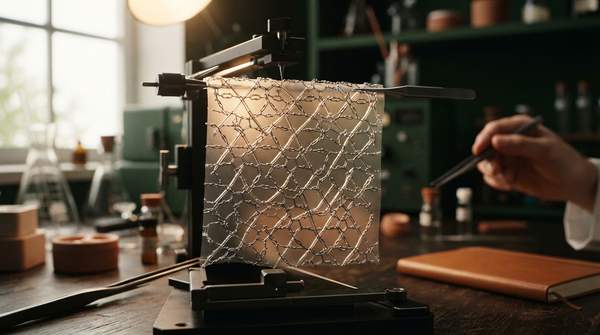
The final stage is where the engineering ambition is most severely tested. Wet-spinning, the extrusion of protein fibers in an aqueous environment, has produced silk fibers with diameters ranging from 10 to 60 micrometers, compared with 2.5 to 4 micrometers for natural spider silk. According to the technical accounts of the field, replicating the complex conditions required to produce comparable fibers has challenged both research and early-stage manufacturing. Even relatively simple spider silk molecules require complex ducts to form an effective fiber, which means the spinner apparatus matters as much as the protein. If the spinning process can be streamlined and perfected, researchers identify potential applications ranging from body armor and surgical sutures to ropes, tires, musical-instrument strings, and aerospace composites.
Mechanical Properties: Strength, Toughness, and Elasticity
What synthetic production aims to match is a distinctive property profile. An account from the American Chemical Society's magazine for students quantifies it: dragline silk has a tensile strength around 1.1 GPa, which depending on the specific alloy can be stronger than steel in the same range, but is beaten by Kevlar at 3.0–3.6 GPa. Silk's advantage is toughness: rigid spider silk has a toughness factor of 180 megajoules per cubic meter, against roughly 50 for Kevlar, meaning far more energy is needed to complete fracture after a crack starts.
The review literature adds that on a weight-for-weight basis silks are nearly as elastic as rubber and two to three times tougher than Nylon or Kevlar. Notably, fibers spun from the engineered 556 kDa E. coli spidroin have been described as the first to fully replicate the mechanical performance of natural spider silk by all common metrics.
Current State and Future Outlook of Synthetic Spider Silk
The state of the field is best summarized as validated at small scale, unresolved at scale. The four-stage pathway has been demonstrated end to end in the laboratory, and host organisms spanning bacteria, yeast, plants, silkworms, and goats have each yielded spider-silk-like proteins. Yet engineered proteins differ in characteristics from those a spider produces, and wet-spun fibers remain thicker than their natural counterparts, a symptom of the unresolved challenge of reproducing the spider's spinning conditions outside its duct.
Assessing the Progress of Synthetic Spider Silk
The engineering of synthetic spider silk has successfully replicated key mechanical properties like strength and toughness, but fully mimicking natural silk's complex structure and performance at scale remains an ongoing challenge. The measurable indicator to watch is continued advancements in host system efficiency, protein purification techniques, and biomimetic spinning methods, as reported in scientific literature and patent filings. When a wet-spun fiber matches natural silk's roughly 2.5-to-4-micrometer diameter alongside its 1.1 GPa strength and 180 MJ/m³ toughness, the central engineering gap will have closed.