Colorfastness is not an accident of chemistry. It is the result of a deliberate fixation step that locks dye molecules onto or into a fiber so they resist washing, perspiration and light. Three broad families of methods do this work: mordanting with metal salts or similar agents, chemical post-treatments applied after dyeing, and irradiation techniques such as ultraviolet, gamma, electron beam and microwave energy. Each works through a different mechanism, and each suits particular dye and fiber combinations.
The Science of Dye Fixation: Ensuring Durable Textile Colors
Why does dye leave a fabric at all? Many dye molecules are small and water-soluble, which is exactly what lets them penetrate fiber during dyeing—and what lets them escape during washing. Fixation is the process that converts this temporary residence into a durable bond, whether through a coordinating metal ion, a chemical crosslink, or a physical change induced by radiation.
The stakes are practical. A review chapter on natural dye fastness by Tarikul Islam and colleagues notes that studies of perspiration fastness "collectively highlight the diverse performance of natural dyes and mordants," underscoring how much the choice of dyeing technique and mordant determines whether a garment survives real wear. Selecting the right fixation route, and controlling variables such as pH and temperature along the way, is what separates a color that lasts from one that bleeds into the wash water.
Traditional Mordanting: Chemical Foundations of Color Binding
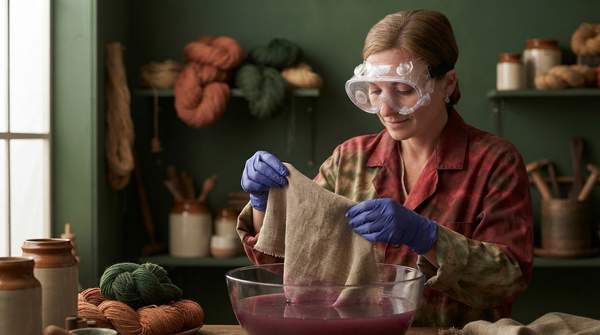
Mordant dyes cannot hold onto fiber by themselves. They require a third substance—the mordant—to form a strong, often insoluble complex called a "dye lake" that attaches to the fiber. Unlike substantive dyes, which fix through direct ionic or hydrophobic interactions, mordant dyes rely on coordination chemistry: a metal ion coordinates both the dye's chromophore and reactive sites on the fiber. This is why the same dye can yield different shades with different mordants.
The mechanism differs by fiber type. On protein fibers such as wool and silk, the mordant binds directly to the fiber. On cellulose fibers like cotton, the mordant instead remains as an insoluble compound on the fiber, and the dye then binds to the mordant—often with the help of tannins, as described in the natural dye review published in PMC.
Mordant dyes have endured for a reason. An Alfa Chemistry overview of mordant dyes points out that even after William Perkin's 1856 discovery of mauveine reduced the need for elaborate pre-treatments, mordant dyes remained important because they showed unmatched colorfastness and worked well with natural fibers. Today, the same source notes, plant-based mordants and biodegradable dye systems are being developed to meet environmental compliance standards.
Chemical Post-Treatments: Enhancing Fixation Beyond Mordants
What if the dye is already applied and fastness is still weak? Chemical post-treatments address exactly this stage. These are processes applied after dyeing to form additional chemical bonds that permanently fix dye to the fiber, and they are especially relevant to natural dyes, whose fastness is often the weak point.
A Chinese patent (CN105970697A) illustrates the approach. Its stated objective is a natural dyeing method for textiles in which "the obtained dyed textiles have high color fastness, and the whole set of dyeing process conforms to the concept of biocompatibility and environmental protection." The patent describes a two-step color-fixing process for natural dyes using agents such as glyoxal and aluminum chloride in a pad-bake method—padding the fabric with the fixing chemistry, then baking it to drive the reaction. The patent also observes that earlier methods achieved only limited improvement in dye utilization, which is the gap such post-treatments aim to close.
The principle generalizes even if the recipe does not: a post-treatment adds a bonding step the dyeing itself could not provide. The specific agents and conditions vary with the dye class and fiber, so the chemistry must be matched to the system rather than applied generically.
Modern Irradiation Techniques: A Sustainable Approach to Dye Fixation
The newest family of fixation tools uses energy rather than added chemistry. The IntechOpen chapter on natural dye fastness lists ultrasound, ultraviolet radiation, gamma radiation, electron beam irradiation and plasma treatment as techniques "gaining popularity in textile dyeing and finishing," with demonstrated enhancement of dye uptake, fastness properties and dyeability.
How does radiation fix dye? By altering the fiber surface and the dye molecules themselves, irradiation can improve diffusion and bonding without heavy chemical loads. A review chapter on radiation effects in textiles, authored by Sheila Shahidi and Jakub Wiener, reports that microwave energy used in dyeing and fixation processes has brought positive results: microwave irradiation increases the diffusion of dye molecules in the dyeing process on both synthetic and natural fibers, and is also used in prefinishing of silk yarns.
Electron beam irradiation is the most forward-looking variant. A review by Tarek Abou Elmaaty, Satoko Okubayashi, Hanan Elsisi and Shahinaz Abouelenin in the Journal of Polymer Research places "considerable emphasis" on its novel applications, including the functionalization of textile materials, which the authors say points toward alternative sustainable techniques and advanced materials. A separate survey chapter covering plasma, electron beam, laser, ion implantation, microwave, gamma and ablation methods describes these as finishing approaches developed to add high value to textile materials and compares them with conventional methods. The common thread: physical energy achieves what chemistry otherwise would, with the appeal of a greener process.
Comparative Framework of Dye Fixation Methods
How do you choose among these routes? The table below compares the three families by mechanism, required agents and typical application, so you can match a method to your dye and fiber—and trace a failure back to the step that was skipped or miscontrolled.
| Method | Mechanism of Action | Key Agents / Process | Typical Application |
|---|---|---|---|
| Mordanting | Metal ion coordinates both the dye chromophore and reactive sites on the fiber, forming a strong, often insoluble complex (a "dye lake"); on protein fibers the mordant binds the fiber, on cellulose it stays as an insoluble compound the dye then binds to | Metal-salt mordants; tannins used with cellulose fibers such as cotton | Mordant dyes on protein fibers like wool and silk; cellulose fibers when combined with tannins; valued for colorfastness on natural fibers |
| Chemical post-treatment | Applied after dyeing to form chemical bonds that permanently fix natural dyes to textile fibers | Example: a two-step pad-bake process using glyoxal and aluminum chloride, described in patent CN105970697A | Natural dyeing where fastness and dye utilization need improvement; designed for biocompatible, environmentally conscious processing |
| Irradiation | Physical energy (UV, gamma, electron beam, microwave, plasma, ultrasound) enhances dye uptake, fastness and dyeability; microwave energy increases diffusion of dye molecules into fibers | Ultrasound, ultraviolet, gamma, electron beam, plasma and microwave treatments as finishing steps | Dyeing and fixation of synthetic and natural fibers; microwave also used in prefinishing of silk yarns; positioned as a green alternative to conventional chemical processes |
Read the table as a decision path. If your dye class requires a mordant, the fiber type tells you which binding geometry applies. If the dye is natural and fastness falls short after dyeing, a chemical post-treatment adds the missing bond. If the goal is enhanced uptake and fastness with less added chemistry, irradiation offers a physical route—provided the equipment and process control are in place.
Diagnosing Colorfastness Failures: Common Problems and Solutions
When color fails, where did fixation break down? An Oregon State University library resource on colorfastness identifies the main culprits: improper dye selection by the dyer; use of inferior, less expensive dyes; use of a fabric for other than its intended purpose; combining fabrics with varying colorfastness; or incorrect care methods.
One failure mode is especially diagnostic. Some dyes—particularly for dark or bright colors—are applied in excess to achieve the desired shade. When the textile is washed, the unfixed excess "bleeds" and becomes visible in the laundry water. Bleeding of this kind points to incomplete fixation or inadequate removal of unfixed dye, not necessarily to a bad dye.
Process control is the other half of the diagnosis. The natural dye fastness review shows that performance varies measurably with technique and mordant choice—for example, perspiration fastness was notably good under acidic conditions in the studies it surveys. That variability means pH, temperature and duration are not incidental settings; they are part of the fixation system, and deviations from validated conditions can undo an otherwise sound method. Finally, the consumer is a variable too: the same Oregon State resource stresses that for a product to retain its appearance, the consumer must follow the permanent care label instructions.
Caring for 'Living Colors': Managing Expectations for Natural Dyes
Naturally dyed textiles behave differently, and pretending otherwise creates dissatisfied customers. Writing for the natural textile brand Anuprerna, the company's guidance reframes fading as a feature: by designing collections with color evolution in mind, brands can offer products that grow more beautiful with age, shifting the value proposition "from static perfection to dynamic, sustainable luxury."
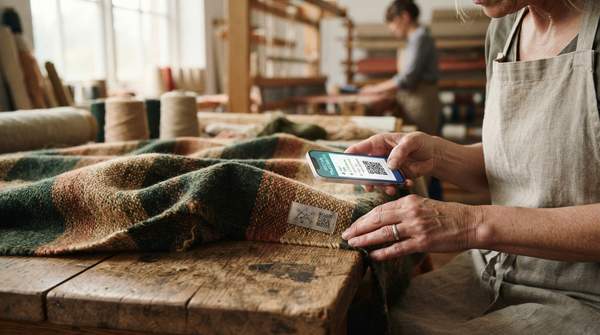
The same guidance is explicit about communication. To prevent customer dissatisfaction, proactive education is essential: care labels and marketing materials must clearly explain the nature of "living colors," so that consumer expectations align with reality. The recommended care protocol is concrete—wash these garments gently in cold water and dry them in the shade to preserve the natural pigments.
For a textile professional, this translates into two deliverables. First, a care label that states the gentle washing and shade-drying requirements plainly. Second, marketing language that describes color evolution honestly rather than promising a static shade the chemistry cannot guarantee. The brand's own framing—dynamic rather than perfect—is a workable template.
Ensuring Durable Color: A Professional's Guide to Fixation Success
Textile professionals must meticulously select dye fixation methods and control process variables to achieve optimal colorfastness and manage consumer expectations for textile longevity. In practice, that means matching the fixation family to the dye and fiber: coordination-based mordanting for mordant dyes, with the binding geometry dictated by protein versus cellulose fiber; chemical post-treatments where natural dyes need an added bond after dyeing; and irradiation where physical energy can deliver uptake and fastness gains with less added chemistry.
It also means treating pH, temperature and duration as part of the fixation system, verifying that excess dye is removed before the product ships, and writing care labels that tell the truth about how the textile must be washed and dried. The measurable indicator of success is reduced customer complaints regarding color fading or bleeding, and improved textile product reviews related to color durability. Track those two signals against your current baseline, and the fixation strategy will prove itself in the market rather than in the dye house alone.
Sources
- Mordant Dyes: Chemical Foundations, Industrial Applications, and Sustainable Potential - DYES / Alfa Chemistry
- CN105970697A - Color fixing process method for natural dyeing of textiles - Google Patents
- Radiation Effects in Textile Materials — IntechOpen
- Advancements in Sustainable Natural Dyes for Textile Applications: A Review - PMC
- Understanding the Fastness Issues of Natural Dyes — IntechOpen
- Electron beam irradiation treatment of textiles materials: a review - Journal of Polymer Research — SpringerLink
- IR
- Colorfastness in Natural Dyes: How to Prevent Fading in Eco-Friendly Fabrics — Anuprerna