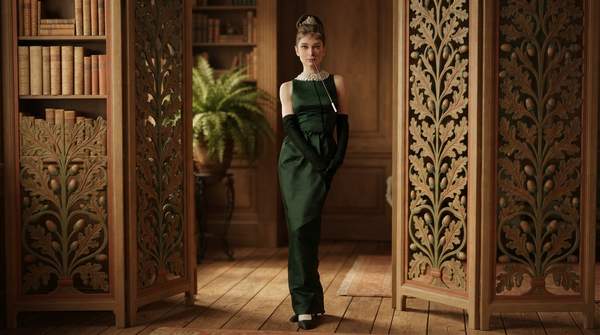
The little black dress has survived nearly a century of fashion cycles not by staying the same, but by being endlessly rewritten. Since Coco Chanel introduced a simple black dress in 1926, designers have treated the LBD less as a fixed garment and more as a canvas—each era pressing its own philosophy of silhouette, material, and texture onto it. Disco gave it sequins; the 1980s gave it bold shoulders; the 1990s stripped it back to sleek minimalism. Understanding that history means understanding how three very different design minds—Azzedine Alaïa, Bottega Veneta, and The Row—used one deceptively simple garment to express entirely distinct visions.
The Genesis of an Icon: Coco Chanel's Vision
Why did a plain black dress matter so much? Before Chanel, black carried strong associations with mourning and service uniforms rather than elegance. Chanel's 1926 design—often described in fashion history as the "Ford" dress for its democratic simplicity—proposed something radical: that a black dress could be modern, versatile, and available to any woman, not just the wealthy. Its power lay in subtraction. Remove ornament, remove color, remove hierarchy, and what remains is line and form. That founding idea—simplicity as sophistication—became the DNA of every little black dress that followed. Every later designer, from the minimalists to the sculptors, has been arguing with or elaborating on that original proposition.
From Utility to Glamour: The LBD in Mid-Century Fashion
By the 1950s and 60s, the LBD had completed its transformation from practical innovation into a symbol of sophistication. The pivotal moment came in 1961, when Audrey Hepburn's Givenchy-designed sheath in Breakfast at Tiffany's cemented the garment's status as timeless chic. That simple, elegant sheath became synonymous with modern urban polish—the look of a woman who needed nothing excessive to be striking. What mid-century fashion proved was that the LBD's meaning could be authored as much by cinema and celebrity as by the runway. The dress was no longer just a design object; it was a cultural shorthand. And crucially, its mid-century form favored clean, body-skimming lines that set the stage for the more assertive silhouettes to come.
Decades of Reinvention: The LBD's Adaptability (1970s–2000s)
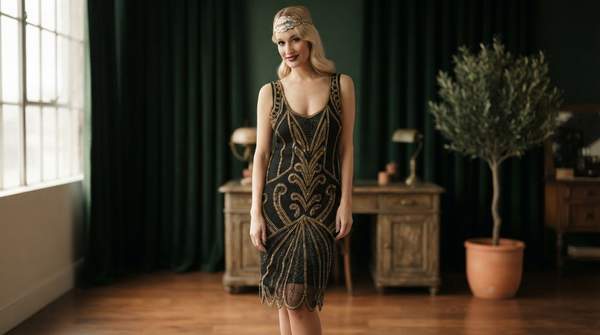
How does one garment absorb disco, power dressing, and grunge-era minimalism? By bending without breaking. In the 1970s, disco culture pushed LBDs toward sequins, glitter, and more daring cuts. The 1980s answered with bold shoulders, asymmetrical designs, and extravagant fabrics—a period when, as fashion historians note, designers like Thierry Mugler and Azzedine Alaïa celebrated the female form through dramatic, sculptural, body-conscious shapes. The 1990s reversed course again: minimalism returned with sleek slip dresses and understated elegance. From the 2000s onward, designers have kept experimenting with textures, cuts, and lengths, yet the core idea—an elegant, simple black dress—has remained constant. That adaptability is the LBD's real genius.
Azzedine Alaïa: Sculpting the Female Form
Azzedine Alaïa did not drape the black dress; he engineered it. Known as the "King of Cling," Alaïa was renowned for his command of elastic yet structured fabrics—materials that could hold a shape while moving with the body. His mastery of sculpting fabrics into silhouettes that embrace the female form has been described as a precursor to the modern dress. In his hands, the black dress transformed from something overly sober into a work of art that celebrates the female shape. The lesson for the reader is this: Alaïa proved the LBD could be architectural rather than merely decorative. Texture and construction—not embellishment—could carry the garment's entire meaning.
Bottega Veneta: The Art of Texture and Materiality
Bottega Veneta's contribution runs through touch rather than silhouette alone. Silhouettes and textures have been an indispensable part of the house's DNA since 2005, when Giles Deacon presented his first ready-to-wear collection there. More recently, under the creative direction of Matthieu Blazy, the brand has reinterpreted the black dress as a piece where texture takes center stage—from leather dresses to designs crafted with mixed materials like silk and wool. The Italian house, known for its materials and tactile expertise, elevates the LBD by incorporating elements that reflect its mastery of textiles: feathers, stitching, subtle volumes, and details in precious metals. Every LBD from the brand, as one fashion editorial puts it, "tells a story through its details."
The Row: Modern Minimalism and Enduring Form
The Row, founded by Mary-Kate and Ashley Olsen, treats the black dress as "a verse in an ode to understated elegance"—heirs, in spirit, to 1990s minimalism. But their minimalism is materialist at its core. The brand's preference for natural fibers—cashmere, virgin wool, silk, linen, and cotton—is not arbitrary; it is dictated by those fibers' capacity for drape, their longevity, and their tactile resonance. Their approach to silhouette is about constructing enduring forms with an innate sense of balance and proportion, akin to a carefully considered architectural edifice. The Row considers the black dress a key piece, designed with meticulous attention to form, drape, and material. Their recent collections continue this: minimalist black dresses in wool and cashmere, with minimalist lines carried forward year after year.
The Little Black Dress: A Century of Design Evolution
Read this chronology as the through-line of the article: each era's LBD reflects a distinct negotiation between designer philosophy, silhouette, and material.
| Decade / Era | Key Designer(s) | Defining Silhouette / Style | Material / Texture Emphasis |
|---|---|---|---|
| 1920s | Coco Chanel | Simple, democratic sheath—the "Ford" dress | Plain, unadorned fabric; simplicity as sophistication |
| 1960s | Givenchy (Audrey Hepburn) | Elegant sheath, synonymous with modern chic | Clean lines; timeless, unembellished |
| 1970s | Disco-era designers | Daring cuts | Sequins and glitter |
| 1980s | Thierry Mugler, Azzedine Alaïa | Bold shoulders, asymmetry, sculptural body-conscious shapes | Extravagant fabrics; elastic yet structured materials |
| 1990s | Minimalist houses | Sleek slip dresses, understated elegance | Understated, sleek surfaces |
| 2000s–present | Bottega Veneta; The Row | Texture-led and quietly architectural forms | Leather, silk, wool; cashmere and natural fibers prized for drape and longevity |
The pattern the table reveals is consistent: the silhouette swings between embellishment and restraint, while the material conversation grows steadily more sophisticated—from Chanel's plain fabric to Alaïa's engineered stretch to The Row's fiber-by-fiber selection.
The Enduring Canvas: LBD's Future in Fashion
What should you take from this history? The decision it supports is simple: the little black dress will continue to be a foundational garment, serving as a versatile canvas for designers to express evolving fashion philosophies through material innovation and silhouette experimentation. Chanel's subtraction, Alaïa's sculpture, Bottega Veneta's tactility, and The Row's architectural restraint are all arguments that the same garment can hold contradictory ideas and survive each one. The measurable indicator to watch is the continued presence of LBDs in high fashion collections, showcasing diverse materials—such as sustainable fabrics and new synthetics—and innovative forms, from deconstructed to architectural to digitally enhanced. As long as designers keep finding new things to say through a plain black dress, the century-old experiment Chanel began remains open.
Sources
- THE LITTLE BLACK DRESS (LBD) — OTTODISANPIETRO
- Little Black Dress: The Evolution of a Timeless Fashion Staple — Vogue College of Fashion
- The Row: Design Philosophy Decoded — SELVANE
- The Row 10 Years Lookbook : dress,skirts,vests,cashmere sweater — Pamperherself