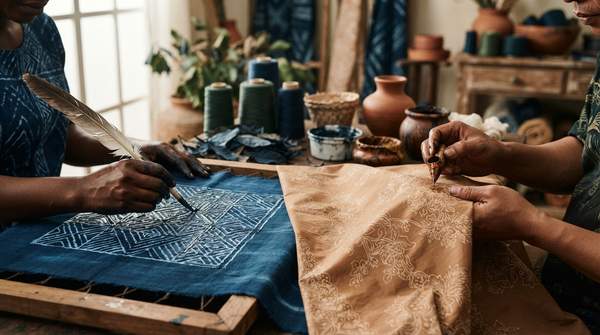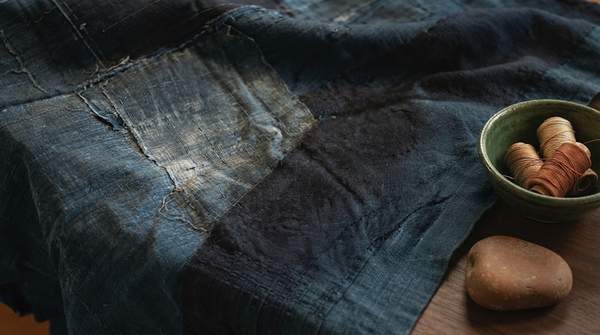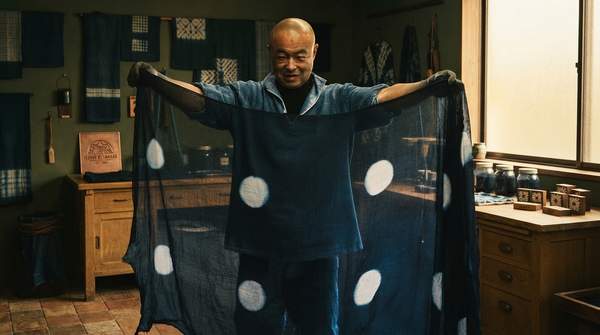
Natural dyeing is not a single craft but a family of regional techniques, each shaped by local plants, local chemistry and local meaning. Three Asian traditions illustrate the range clearly: Chinese silk dyeing drew its blues, reds and yellows from fermented indigo, madder root, safflower and other botanicals; Japanese aizome builds its deep blue through a living fermentation vat; and Indian artisans apply plant-derived color to cloth through block printing and tie-dyeing. Set side by side, the three reveal how different communities solved the same problem, coloring textile fibers, with entirely different materials and methods.
The Enduring Legacy of Natural Dyes: A Global Perspective
A review of natural and synthetic dyes published in the PMC research archive frames traditional dye extraction as "an integral part of a society, facilitating the transformation of raw plant materials into vivid and enduring hues used for textiles, art, and other cultural expressions." The same review emphasizes that these methods are "rooted in local knowledge and practices" and reflect "deep connections between people, plants, and the art of coloration."
That framing matters for comparison. Because dyeing traditions grew from local botany, two regions could arrive at the same color through different plants and different processes. The blue of Chinese silk and the blue of Japanese aizome both come from indigo, yet the surrounding techniques, from thread preparation to vat management, differ enough that the results are recognizably distinct crafts rather than variations of one method.
A Journey Through Time: The Evolution of Dyeing
The historical arc is long. Japan's dyeing tradition extends back some two thousand years, with records from the 7th century documenting textiles dyed red, blue and other colors, according to an RMIT Pressbooks colour theory reference. In China, the Ming (1368–1644) and Qing (1644–1911) dynasties produced detailed records of dye types and dyeing processes, a historical resource for understanding how natural substances achieved the colors associated with Chinese silk.
The Renaissance brought a more scientific approach to the vat. As a textile studio account of dyeing history explains, dyers came to understand the importance of pH levels and the role of mordants such as alum, iron and tannin in fixing color and affecting outcomes. Venetian dyer Gioanventura Rosetti's 1548 "Plictho de Larte de Tentori" stands as one of the most influential dyeing works of the period.
The decisive disruption came in the 19th century. As the Wikipedia entry on natural dyes records, "The first synthetic dyes were discovered in the mid-19th century, starting with William Henry Perkin's mauveine in 1856, an aniline dye derived from coal tar." Alizarin, the red of madder, was duplicated synthetically in 1869, collapsing the market for naturally grown madder. The 20th century then brought a counter-movement: William Morris's arts-and-crafts circle preserved natural dyeing, and today, as the same entry notes, "ecological consciousness has prompted a renewed interest in natural-dye techniques."
Chinese Silk Dyeing: Artistry and Ancient Hues
Chinese dyeing was inseparable from silk. According to the RMIT Pressbooks reference, creating different colored silk threads often began with bleaching, boiling the threads in the ash of Lian tree fruit. From there, a botanical palette opened up: blue from fermented indigo, black from iron vitriol, red from madder root or safflower, and yellow from Jinzi fruit.
Two features distinguish this tradition. First, the palette was built by pairing specific plants with specific colors, a systematized botanical knowledge rather than ad hoc experimentation. Second, the Ming and Qing dynastic records mean that modern understanding of these methods rests on unusually detailed historical documentation, describing both the dye types and the processes used. The evidence specifies silk as the material and these plants as examples of dye sources, though it does not present them as an exhaustive inventory of Chinese dyeing.
Japanese Aizome: The Deep Blue of Tradition
Aizome, Japanese indigo dyeing, is described by the visvim craft documentation as "one of the most indicative forms of natural dyeing," with the pigment sourced from Japanese indigo (Persicaria tinctoria) and other plants. What sets indigo apart, the same source explains, is that its pigment is insoluble: whereas most plant dyes are extracted by steeping plant material in hot water, indigo requires alkaline reduction to dissolve the pigment. This vat-preparation process is called "ai-date," and it has two major forms: "hakkō-date," a natural method using fermentation bacteria, and "kagaku-date," a scientific method using a reducing agent.
The traditional studio so-i practices the natural path, a method called "Aka-hakkō-date," or natural lye fermentation. Its dye is made entirely from natural materials: fermented indigo leaves (sukumo), wood ash lye, oyster shell lime and wheat bran, with no chemicals involved. The studio describes the vat as "alive and constantly changing," noting that it "cannot be fully controlled by human will" and that its color "shifts day by day." The craft remains regionally rooted: the artist Jeannine Cook, visiting Tokushima, reports that several indigo factories remain there, where the contemporary master craftsman Toshiharu Furusho creates indigo-dyed fabrics, and that the process is "long and complex," beginning with producing the material from which the dye is fermented.
Indian Block Printing: Patterns of Heritage
India's tradition is defined by the application of pattern. India is known for its rich natural dyeing tradition, producing vibrant colors from botanical sources such as indigo, turmeric, and madder root. In regions like Rajasthan and Gujarat, artisans are revitalizing traditional methods including block printing and tie-dyeing. These efforts are supported by organizations such as the Dastkari Haat Samiti and the Crafts Council of India, which provide training, resources, and marketing opportunities.
The historical weight of this craft is documented by Smarthistory for Khan Academy, which notes that vividly painted and dyed textiles were coveted items, often quite expensive and made almost exclusively by artisans in the Indian subcontinent. The distinctive feature here is the resist-and-pattern approach: color is placed deliberately in designs rather than saturating whole threads, which shifts the artisan's skill toward carving, registration and repeat printing.
Comparing Traditional Natural Dyeing Techniques
Placing the three traditions side by side shows where they diverge most sharply: in the source of the color and in how it reaches the cloth. Chinese silk dyeing and Indian block printing share a multi-plant palette, while aizome is a single-pigment, fermentation-driven craft. Indian block printing is set apart by its pattern-application method rather than its dye chemistry.
| Region/Tradition | Primary Dye Source(s) | Key Technique(s) | Cultural Significance |
|---|---|---|---|
| Chinese silk dyeing | Fermented indigo (blue), iron vitriol (black), madder root or safflower (red), Jinzi fruit (yellow) | Thread bleaching with Lian tree fruit ash; documented dyeing methods and processes | Ming and Qing dynastic records of dyes and processes form a key historical resource for the colors associated with Chinese silk |
| Japanese aizome | Fermented indigo leaves (sukumo), with wood ash lye, oyster shell lime and wheat bran | Aka-hakkō-date: natural lye fermentation of the vat (alkaline reduction to dissolve insoluble indigo pigment) | A 2,000-year dyeing tradition; Tokushima remains a center where master craftsmen produce indigo-dyed fabrics |
| Indian block printing | Indigo, turmeric and madder | Block printing and tie-dyeing, revived by artisans in Gujarat and Rajasthan | Vividly dyed textiles historically coveted and expensive; artisans supported by the Dastkari Haat Samiti and Crafts Council of India |
The comparison also reveals a shared principle: each tradition depends on knowledge that is local and transmitted. Whether it is the correct ash for bleaching silk, the daily care of a living fermentation vat, or the carving and printing of pattern blocks, the craft lives in practiced hands rather than in a formula alone.
Embracing and Preserving Natural Dyeing Heritage
The practical decision this comparison supports is to support initiatives that preserve and promote traditional natural dyeing techniques. The evidence shows this is already happening on several fronts: Indian organizations sustain block-printing artisans in Gujarat and Rajasthan; Japanese studios continue the natural lye fermentation method; and, as the Wikipedia record notes, natural dyeing "remains a living craft in many traditional cultures of North America, Africa, Asia, and the Scottish Highlands," with ecological consciousness driving renewed interest.
The measurable indicator of success is increased visibility and adoption of traditionally dyed textiles in artisan markets and sustainable fashion. A reader can watch for that directly: whether indigo-dyed fabrics from Tokushima, block-printed textiles from Gujarat and Rajasthan, and naturally dyed silks appear more widely in artisan marketplaces and sustainable fashion lines. The revival is real but its extent is not quantified in the evidence, so visibility, not volume, is the honest yardstick.
Sources
- A review of history, properties, classification, applications and challenges of natural and synthetic dyes - PMC
- RMIT
- A Brief History of Natural Dyes - Aleatorio Designs — Aleatorio Designs - A textile studio working with reclaimed fabric and natural dye
- Natural dye - Wikipedia — EN
- Aizome (Natural Indigo Dyeing) | Dissertation — visvim
- Aizome — 草衣 so-i
- "Aizome" or The Art of Japanese Indigo Dyeing — Jeannine Cook
- Client Challenge — Khanacademy